
Help Restore the Swannanoa
Assessing the Damage
In July of 2025, RiverLink produced a detailed study of streambank damage caused by Tropical Storm Helene and opportunities to establish more flood resilience along a 6.9-mile stretch of the Middle Swannanoa River. This section of river extends from the outskirts of Black Mountain through Swannanoa and downstream to the western side of Warren Wilson’s campus.
Thanks to funding from the Community Foundation of Western North Carolina, RiverLink contracted Wildlands Engineering to study the river’s current condition. The study looked at damage to natural features like riverbanks, plant buffers along the river (called riparian buffers), and nearby floodplain areas. The goal was to find ways to repair this damage and make the area better prepared for future flooding.
Do You Need Help with Recovery?
Landowners who are interested in grant funded riverbank restoration are encouraged to fill out this form in order to begin project site planning:
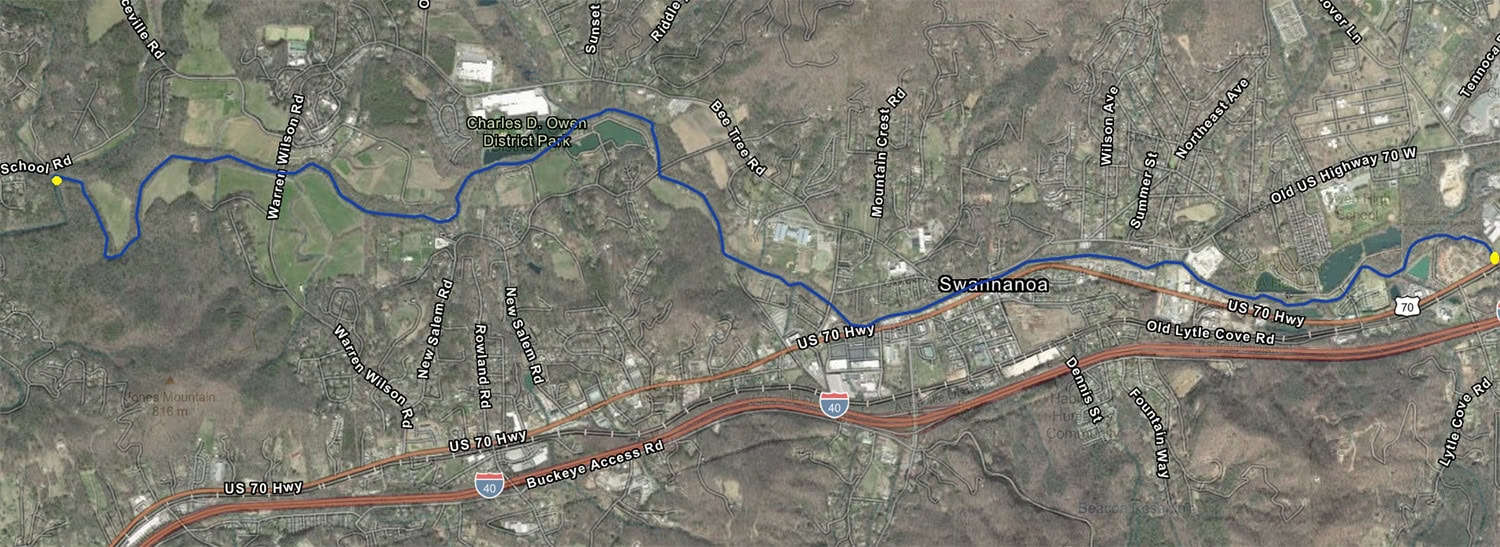
The total cost to fix the damage and make the river more flood-resilient is estimated to be between $10 and $13 million. To learn more about the damage assessment and proposed actions, see the Helene Study Overview. The study was designed to be replicable in other areas impacted by a flooding disaster and the study methods are carefully outlined in a detailed report.
Addressing Water Quality Issues
The Middle Swannanoa River was impaired before the impacts of Tropical Storm Helene. Fecal coliform bacteria levels regularly exceed state water quality standards for swimming. Surveys have also found that the river does not support a healthy population of aquatic organisms known as benthic macroinvertebrates—an important indicator of water quality.
RiverLink worked with Wildlands Engineering and stakeholders, including Friends and Neighbors of Swannanoa and the Swannanoa Grassroots Alliance, to expand the initial post-Helene damage assessment to develop a watershed action plan that charts a path toward a cleaner Middle Swannanoa River. Click on the button below to explore the interactive Watershed Action Plan completed in March, 2026.
RiverLink is grateful for the funders that make it possible to take critical steps toward restoring and strengthening the Swannanoa River for future generations. Project partners include The Friends and Neighbors of Swannanoa and Warren Wilson College.