
Control the Rain on Your Roof
Why Reduce Roof Runoff?
Runoff from rooftops and other hard surfaces can have negative impacts on our local streams. Stormwater runoff is rainfall that is unable to soak into the ground due to hard, or impervious, surfaces such as concrete, asphalt, and rooftops. In urban areas, most roof downspouts direct water onto a hard surface, such as a driveway, or directly into a storm drain that empties into the nearest stream. Stormwater carries pollutants such as sediment, bacteria, fertilizer, pesticides, herbicides, and trash into our streams. By keeping stormwater on site where it can soak into the ground, we can reduce the quantity and speed of runoff, which also helps prevent erosion and sedimentation of our waterways.
Climate change and rapidly increasing development are creating greater challenges for our aging municipal stormwater systems. As green spaces shrink; rainfall comes in more frequent, heavier storms; and periods of drought extend between storms; we are implementing effective and scalable solutions for managing the accompanying increase in runoff. Green infrastructure is a nature based strategy that allows rainfall to be filtered and absorbed where it falls. Redirected downspouts, rain barrels, and rain gardens are green infrastructure solutions that can be adapted to the individual, household, and community scale. Our program empowers residents to reduce runoff at home by providing the resources to disconnect their downspouts and capture rainwater for future use.
Ways to Reduce Roof Runoff

Downspouts
Directing gutter downspouts onto green space instead of a driveway or storm drain is the simplest way to reduce roof runoff. It may be as simple as adding a downspout extension to direct roof runoff onto a lawn or landscaped area where it can soak into the ground. This basic action eliminates runoff and allows any pollutants in the water to be filtered naturally by soil and plants. If your roof downspouts are currently directed onto a driveway or connected to a storm drain, you may be a good candidate for this strategy.
Rain Barrels
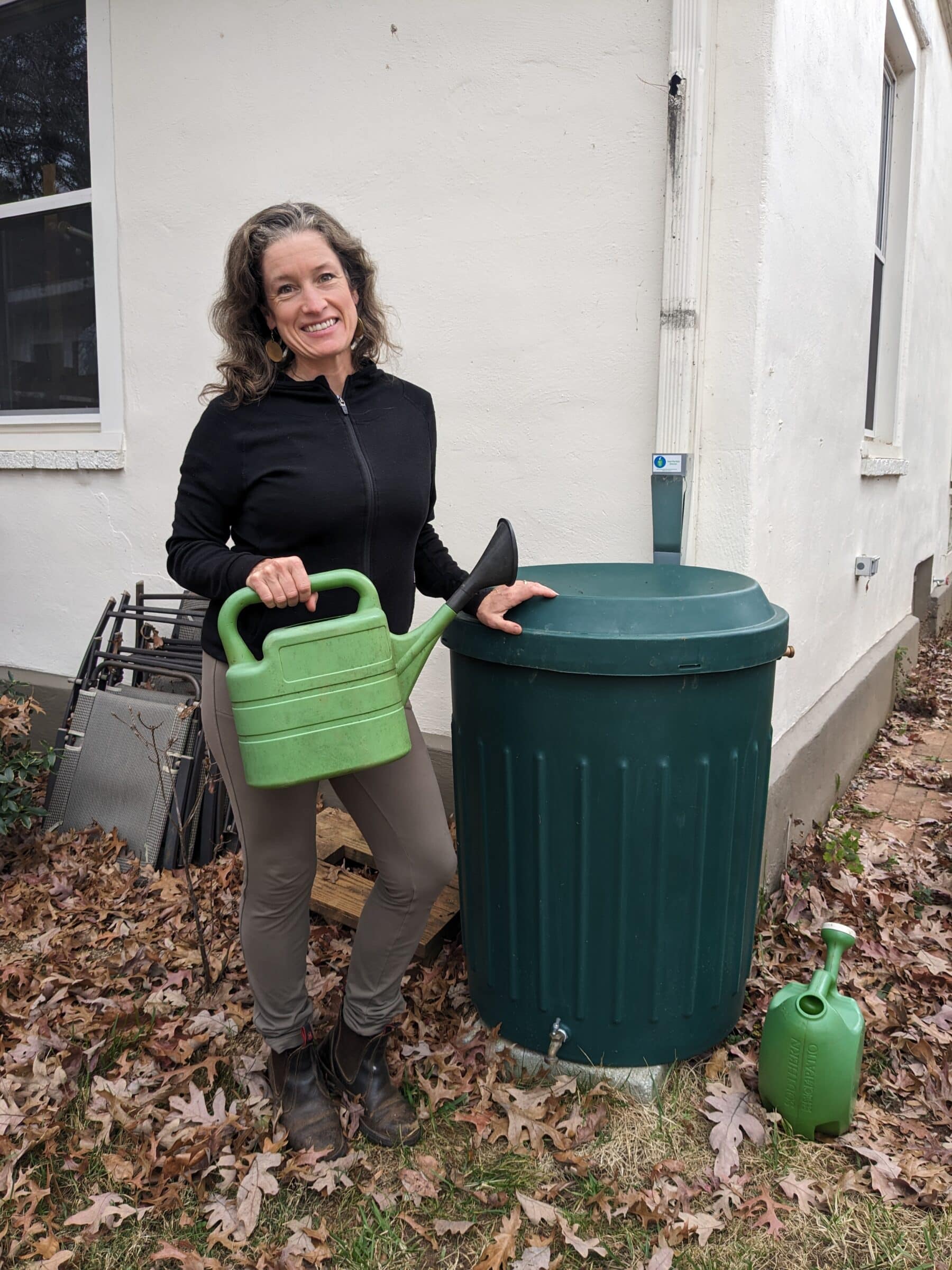
Rain barrels are another strategy to reducing runoff that capture and store rainwater for later use. Maybe you’re convinced it’s good for the river, but why would YOU want a rain barrel? Rain barrels are a great solution for people who have gardens or lawns that need irrigation during dry periods. Rain barrels save potable water for other uses and take advantage of a free resource, rainwater, that can be stored until needed. On average, lawn and garden irrigation makes up 40% of summer household water use. A single 55 gallon rain barrel can save 1300 gallons of water during peak summer months. A rain barrel is an easy and affordable way to store free water for future use in your yard or garden while protecting the streams that ultimately flow into the French Broad.
Three Ways to Take Action
- Check out the WaterRICH Guide for detailed instructions on constructing rain barrels and rain gardens, among many other DIY strategies to managing runoff.
- Subscribe to RiverLink’s newsletter to stay informed on future grant funded opportunities.
- Complete the Rain Barrel Interest form to be contacted about rain barrel distribution events.
Questions? Email waterresources@gmail.com. Let’s work together to keep stormwater on site and protect the French Broad River watershed!