RiverRATS
Creating a New Generation of River Stewards
Our RiverRATS Education Program provides free environmental education activities to students throughout the French Broad River watershed. Activities are focused on place based, hands on, STEAM (Science, Technology, Engineering, Art, and Math) experiences that are aligned with the NC Essential Standards. Activities give students a chance to act as stream ecologists and river stewards, helping them gain a deeper connection and understanding of our local streams and rivers.
- Location: Lessons can take place in the classroom or at a nearby stream site.
- Grade Levels: K–12, with a primary focus on grades 3–8.
- Duration: Each lesson runs 45–90 minutes.
- Group Size: Up to 30 students per session; we can lead up to 4 sessions per day (maximum 120 students per day).
- Service Area: We work with public and charter schools in Buncombe, Haywood, Henderson, Madison, Mitchell, Transylvania, and Yancey counties, North Carolina.
- School Availability: Each school may schedule up to 3 days of programming per year, with additional days available for larger student populations.
- Find more information in our FAQ below.
This is a needs based program and we will prioritize schools that lack access to natural spaces, as well as those with a high percentage of low-income and under resources families.

Lesson & Activity Offerings
Macroinvertebrate Sampling
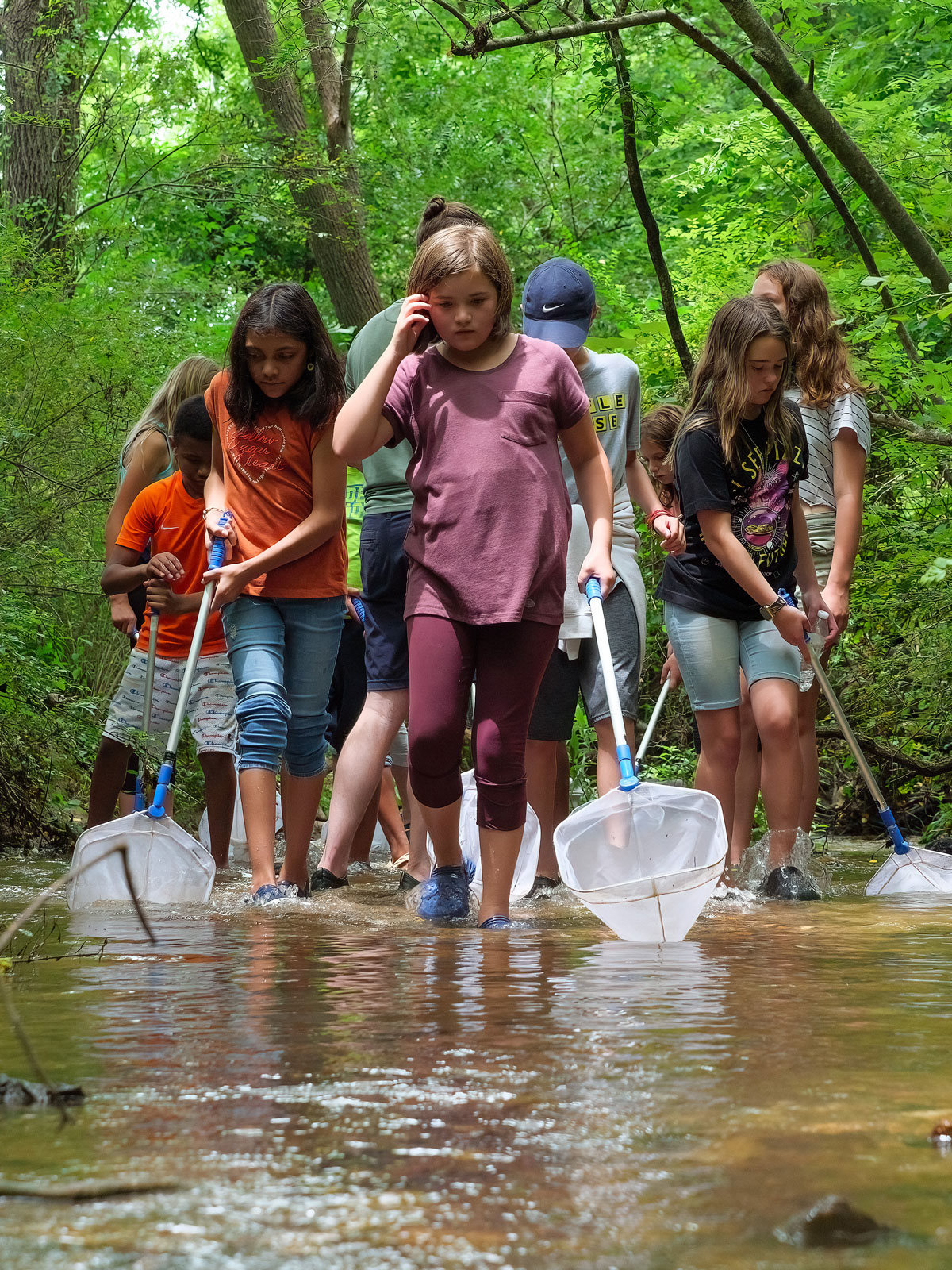
Get your students’ feet wet as they explore the tiny creatures that reveal big clues about water quality. Using specialized nets, students will collect aquatic macroinvertebrates and identify them with a dichotomous key to learn about their unique adaptations and ecological roles.
By examining the diversity and abundance of species, students will assess the overall health of the stream and discuss how environmental conditions affect these living indicators. This immersive, hands-on lesson combines science and discovery, helping students connect biodiversity to the wellbeing of freshwater ecosystems.
Erosion & Flooding – Stream Table Simulation
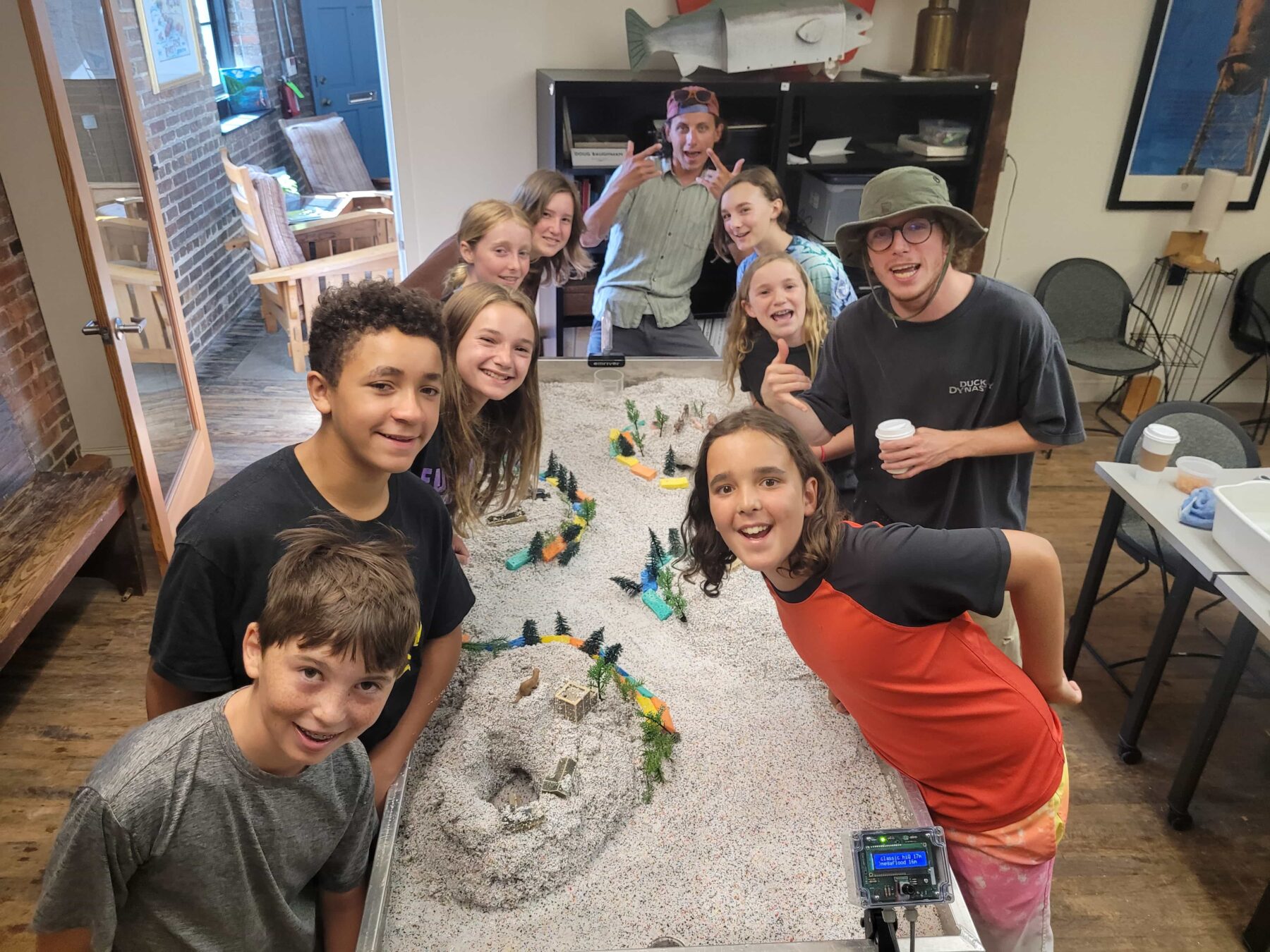
Watch a river come to life as students explore how water shapes the land through erosion, deposition, and flooding. Using an interactive stream table, they’ll create and observe a miniature watershed, experimenting with how rivers form, meander, and change over time.
Students will work together to build small communities along their rivers, test how floods affect them, and discover how riparian buffers can protect both people and ecosystems. This engaging, hands-on activity helps students connect Earth science concepts to real-world challenges in land use, flooding, and river management.
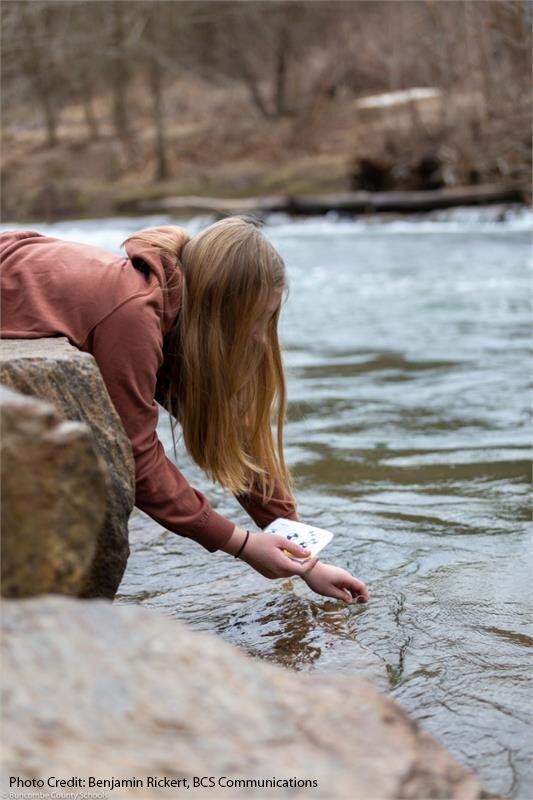
Water Chemistry Testing
Let your students step into the role of environmental scientists as they investigate the health of a local waterway. Using real testing methods, they’ll measure six key water quality indicators and analyze what those results reveal about the ecosystem.
Guided by our educators, students will interpret their data, consider the surrounding landscape, and form hypotheses about what might be influencing the water’s chemistry. This hands-on investigation builds STEM skills in observation, analysis, and critical thinking while deepening students’ understanding of how human activity and natural processes affect water quality.
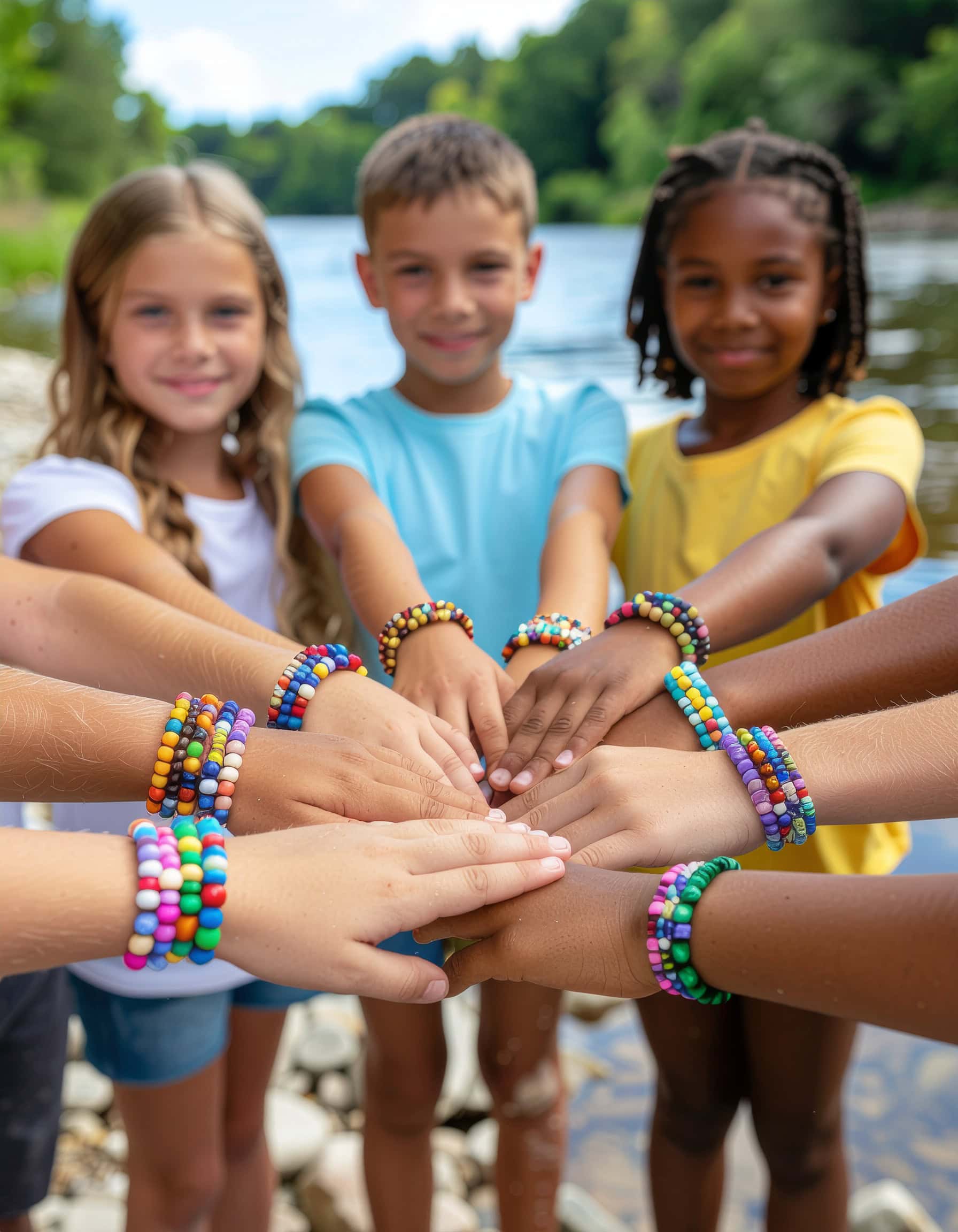
Water Cycle – The Incredible Journey
Explore the water cycle and help your students understand how water moves through Earth’s systems. In this interactive game, each student becomes a water molecule traveling through the hydrosphere—moving between clouds, rivers, plants, oceans, and more. Every journey is unique, and along the way, students create a colorful bracelet to record the path their water molecule takes.
Through movement, creativity, and discussion, students see how water continually changes form and location, connecting weather, climate, and ecosystems. This lesson reinforces key concepts like evaporation, condensation, precipitation, and collection while encouraging systems thinking about how all parts of the water cycle are linked.
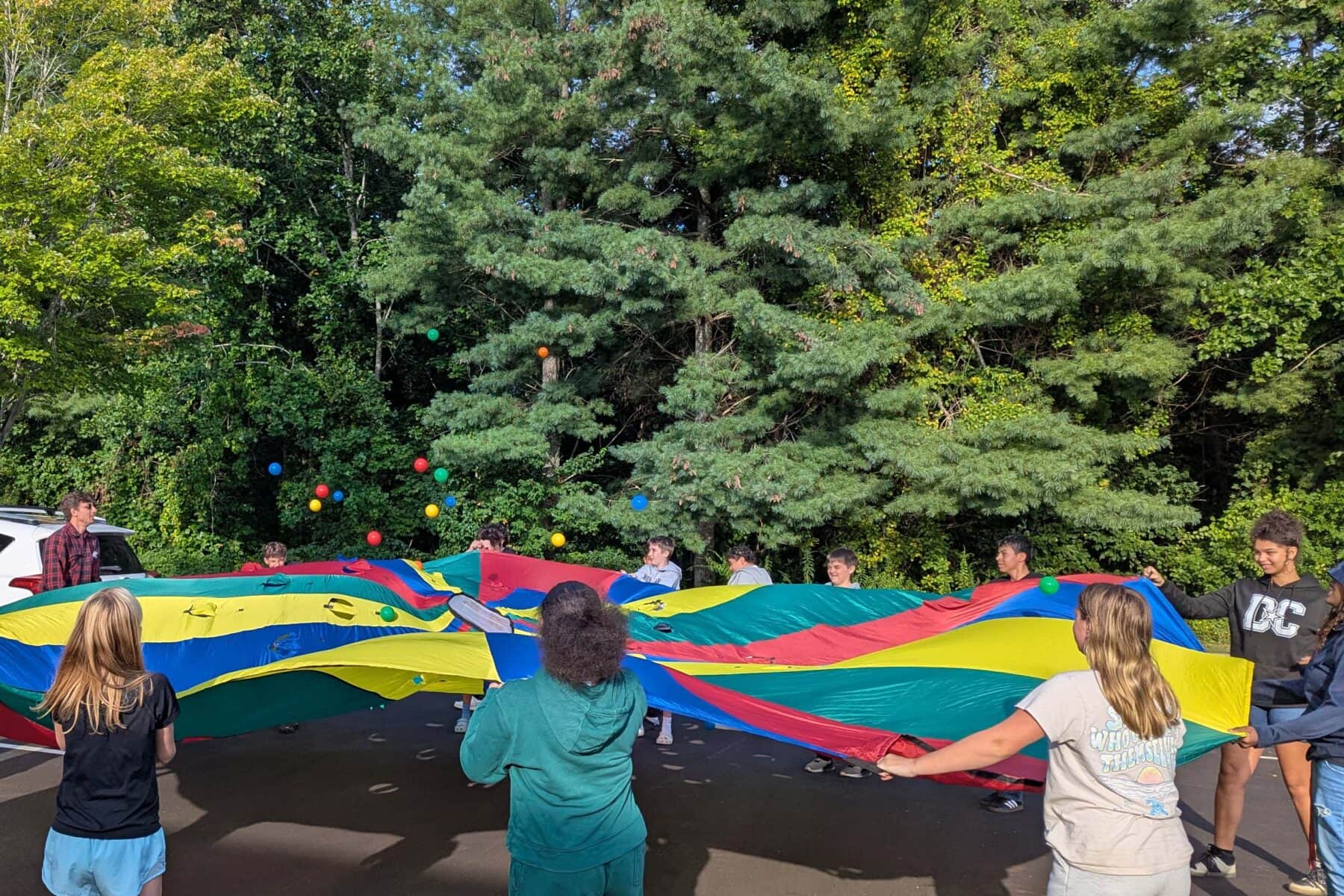
Groundwater & Aquifers
Help your students understand how water interacts with different types of surfaces and what happens to it underground. Using a giant parachute, they’ll visualize stormwater infiltration, cavern formation, and human interactions with aquifers. Through active, hands-on learning, students see how surface and groundwater are connected and why protecting these hidden water sources matters.
This lesson reinforces key Earth science and water cycle concepts—such as permeability, erosion, and aquifer recharge—while encouraging systems thinking about how human actions affect water quality and availability. It’s an energetic, memorable way to make an unseen part of our planet come alive.
Frequently Asked Questions
How many lessons can I request in a year?
We are able to do three days of programming per year with each school, this is per school not per grade level so make sure to coordinate with your fellow teachers. Depending on the size of your group we may be able to run multiple different lessons in that time frame, or we may just rotate many groups through the same lesson.
How far in advance should I request a lesson?
Our program calendar fills up quite fast so we recommend requesting at least a few months in advance. If you’re looking for fall programming we suggest you reach out in late spring. If you’re looking for Spring programming we suggest reaching out sometime during the winter.
How many students can participate in a lesson?
Each of our lessons can accommodate up to 30 students at a time. For the sake of our staff we prefer to limit lessons to 4 per day, meaning we can teach up to 120 students over the course of a day.
Where is the stream?
We can meet your class at a lot of different local waterways. Our staff will work with you to find the most convenient, safe, and appropriate locations for your group.
What do students need to bring?
Students joining us at the stream should come prepared with clothes and shoes that can get wet and/or dirty, sunscreen, a towel, and water. If your students do not have access to good water shoes or clothes we do have Crocs that we can bring on request.
If we’re coming into the school then all your students will need is a curiosity for environmental science and maybe a pen and paper to take notes.
Are students required to get in the water?
No one is required to get in the water if they are uncomfortable. We want everyone to have a positive experience, whether that’s on the bank or in the stream.
What happens in the event of inclement weather?
Depending on the weather we may have to cancel or reschedule your lesson at the stream. If it’s just a light sprinkle, we will continue as planned; however, if there’s concerns about flooding, low temperatures, thunder or lightning we will contact you to discuss alternative options.
All lessons in the classroom will follow typical school delays and closures.
How can I help Support this Program?
Making a donation is a great place to start! If you can’t make a financial contribution then you can help spread awareness of our program to your parents and fellow teachers.
Thank you to our program sponsors