
Two years after Hurricane Helene barreled through our communities, reshaping the landscape across the French Broad watershed—we’re looking back at the recovery journey so far. A USDA estimate has it that true recovery will take 25 years—through projects and decision-spaces that aren’t always visible. Across our work—from stream restoration and flood mitigation to land stewardship, community education and advocacy for the river—the work continues through the professional partnerships that make every project better. Here’s to the entrepreneurs, engineers, public servants, storytellers, supporters, recreationists and river lovers of every stripe—we are honored to have you with us on the journey.
Championing river bank stabilization, repair + restoration
As an early step following Helene, RiverLink secured a grant from the Community Foundation of WNC to assess a 7-mile stretch of the heavily damaged Swannanoa River. Working with our friends at Wildlands Engineering, this evaluation identifies locations for proven restoration strategies, and will support access to funding for riverbank repair for years to come. First up: with state approval for our Watershed Plan for the Middle Swannanoa, we were able to secure EPA funding for green stormwater infrastructure at the future Beacon Bike Park.
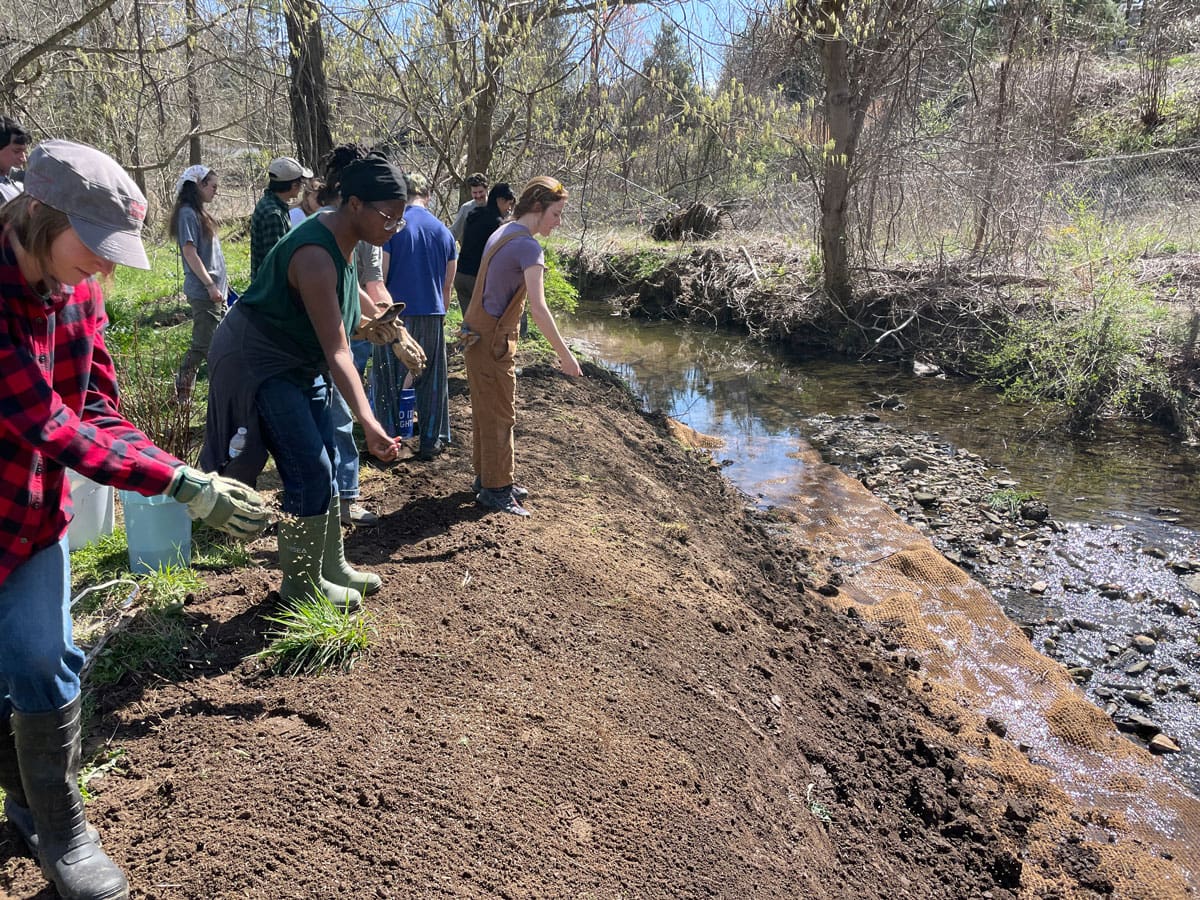
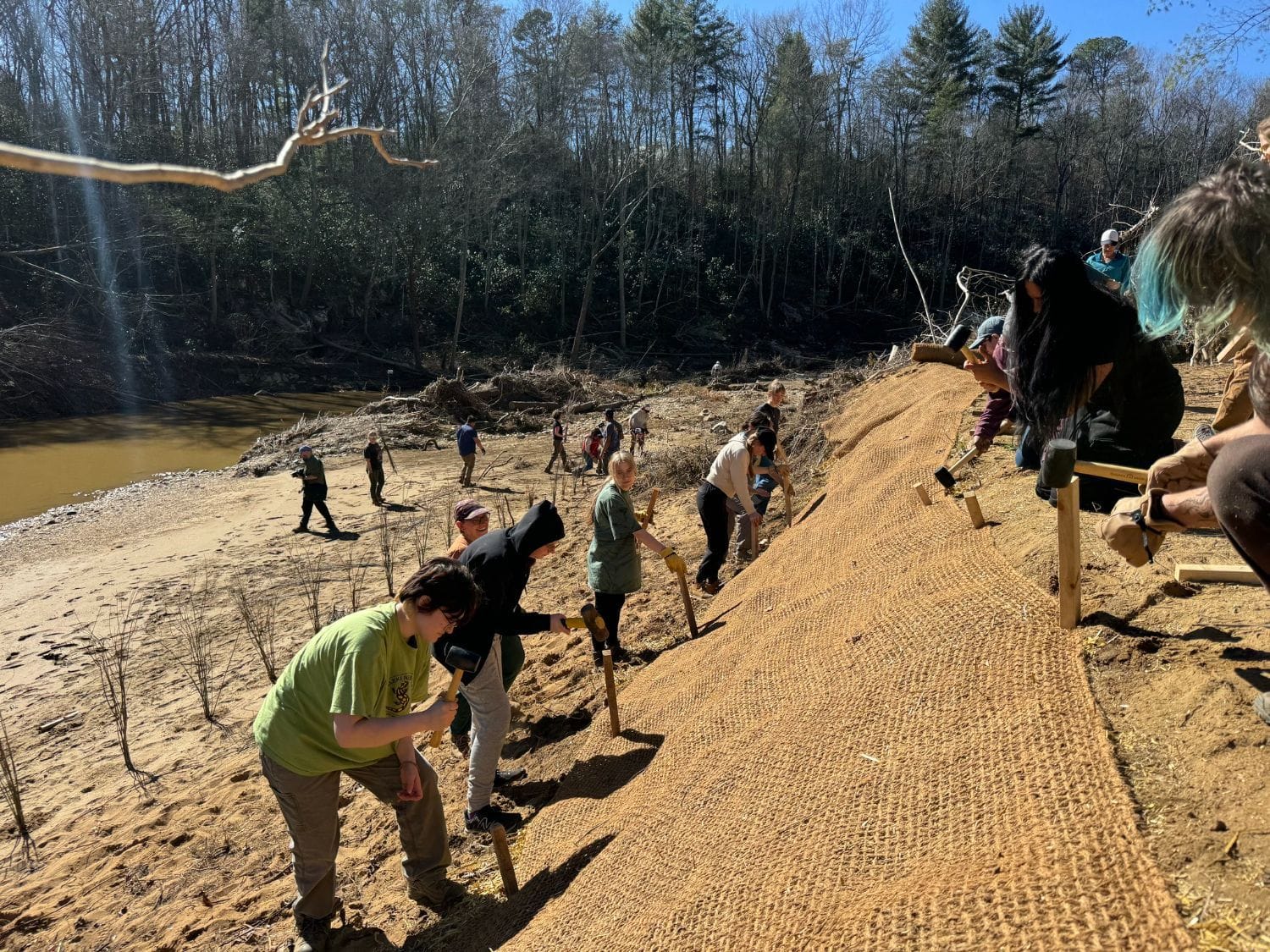
Another early move was to revitalize our Adopt-a-Stream program to stabilize nearly 4 miles of eroding streambanks, coordinating with landowners and engaging volunteers including students from Warren Wilson College and UNCA. We’ll be continuing this work for streams and communities in need for the foreseeable future, as there are many miles of streams yet to address.

To support the miles to come, we have just launched a River Cane Propagation project to address the lack of plant material available for stream restoration projects and for sustainable use by Cherokee artisans. Funded by the Truist Foundation Western NC Recovery and Resiliency Fund (via the Center for Disaster Philanthropy) and the Resilient Futures Co-Lab, the project will bring together organizations interested in and already working with river cane, document best growing practices, and take essential early steps to build a commercial supply chain by recruiting growers and connecting them to restoration practitioners across the French Broad watershed.
Ensuring our rivers have a seat at critically influential decision-making tables
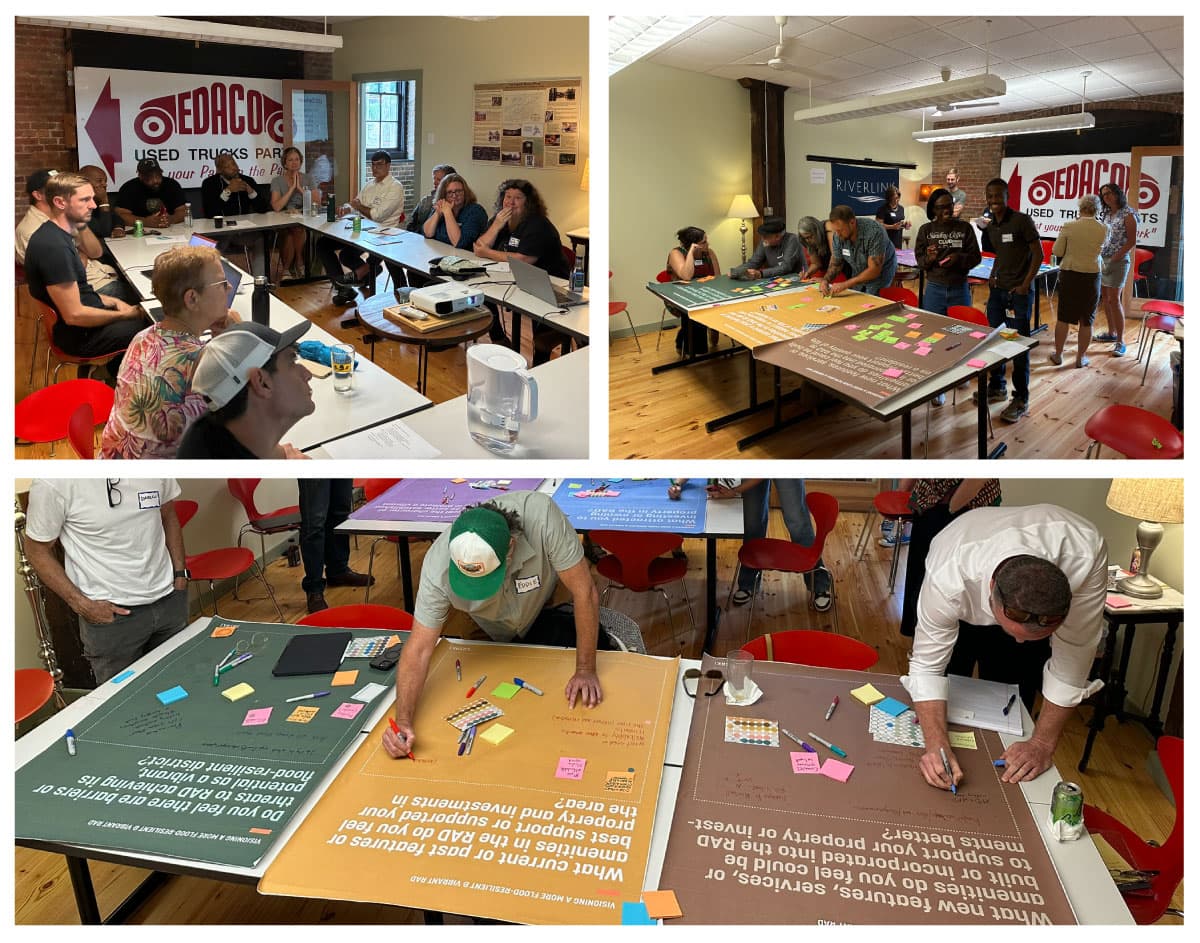
Another early step following Helene was our creation of a new Recovery, Resilience + Planning Division to ensure the watershed’s 4,000 miles of streams and rivers have a voice in the region’s comeback. One of the division’s first moves, thanks to generous support from Etsy, was to initiate a $100,000 River Arts District Visioning + Planning process with the international planning and design firm, Sasaki. RiverLink and Unified RAD co-led this resilience-focused initiative to create preliminary design concepts for the district’s future—a vision statement to guide the RAD’s recovery, based on a series of stakeholder “charrettes.” For those who remember a similar process led by RiverLink as the RAD took shape in the late 1980s-early ‘90s—this effort will have felt familiar.
From there, RiverLink offered dozens of presentations on post-Helene recovery, prioritizing our rivers and their restoration—perhaps most visible through Executive Director Lisa’s 2026 TEDx Talk on the importance of riparian zones to mitigate the effects of major floods. We have contributed to panel discussions led by the City of Asheville, Chamber of Commerce, and Explore Asheville—always with eye to keeping the rivers front of mind for community leaders as our recovery continues.
Today, we have secured ongoing inclusion in City and County recovery planning. RiverLink has been folded into regional jurisdictional work groups and stakeholder gatherings tied to ecological and economic recovery, feeding into larger civic planning efforts like the City’s Urban Land Institute Advisory Panel process.
Taking an active role for riverfront property acquisition
RiverLink has been opportunistic in this arena for decades in its aim to make Asheville’s riverfront a destination. This year, RiverLink signed an agreement and purchased the former Woodmen of the World property on the Swannanoa. Thanks to an $822,780 grant from NC Division of Environmental Quality’s Flood Resiliency Blueprint program, RiverLink will remove the damaged building and infrastructure, and enhance the property’s natural capacity to slow the flow of major storm events. The five-acre parcel sits just upstream from the Whitson Avenue bridge.
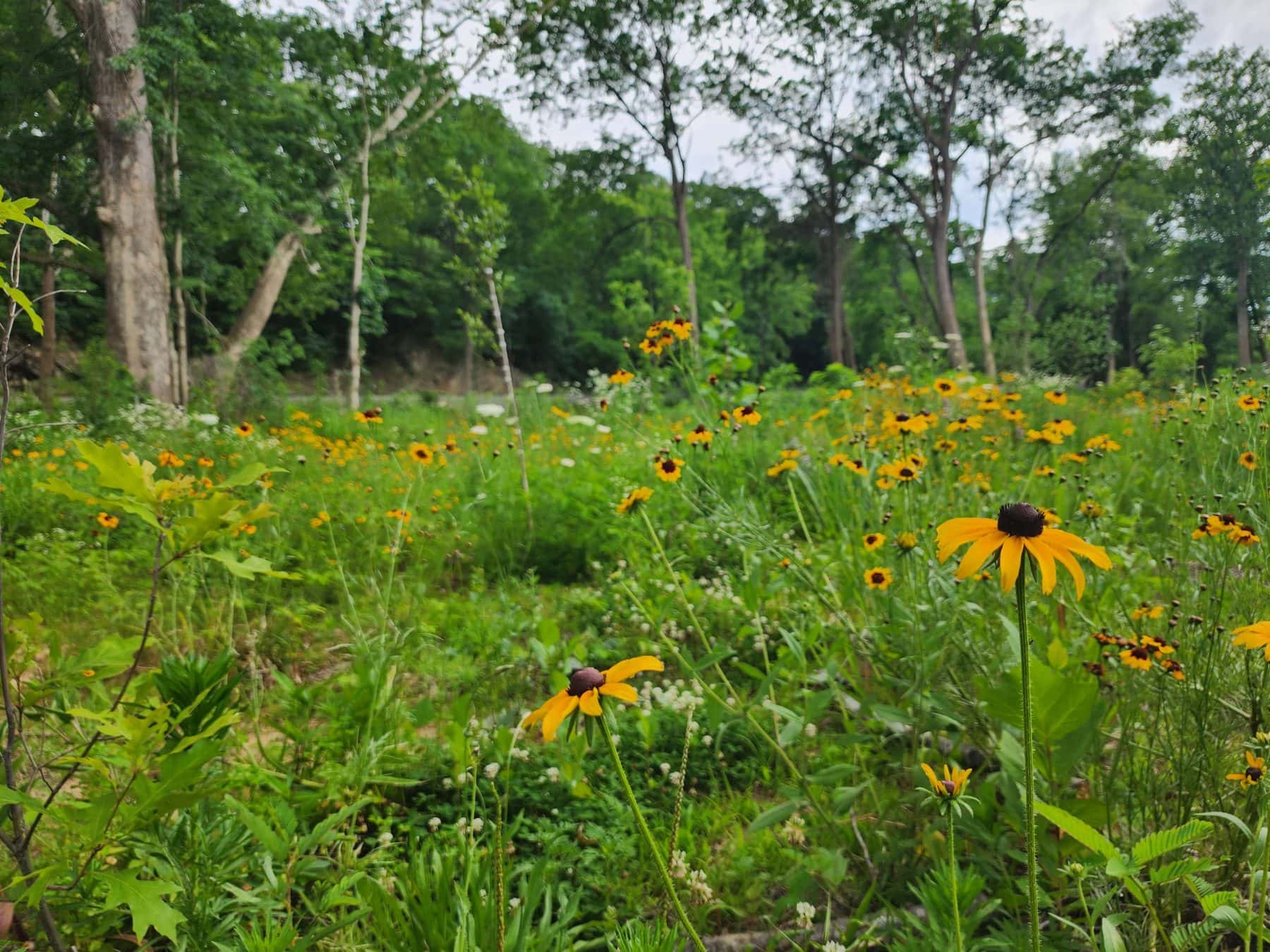
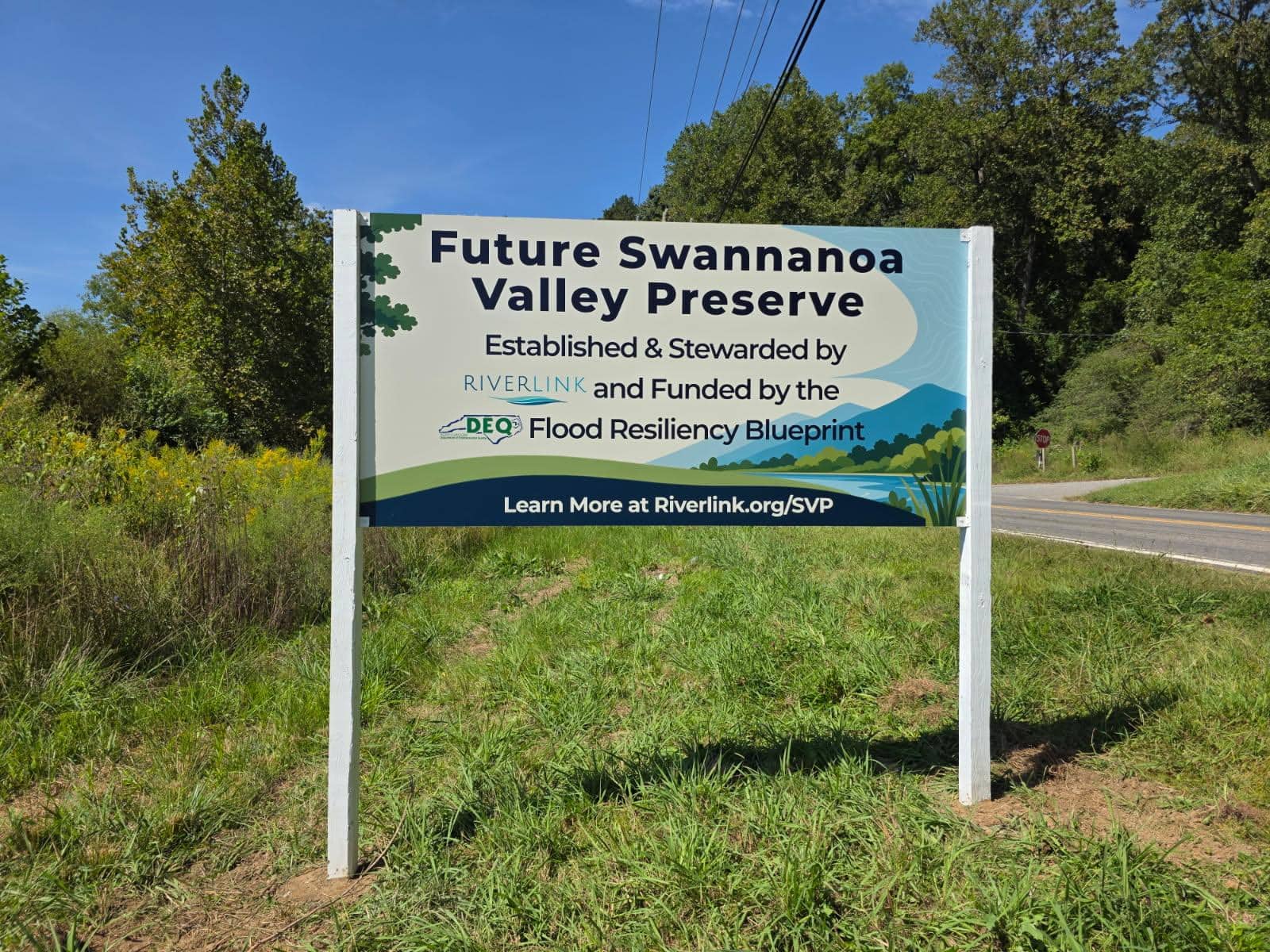
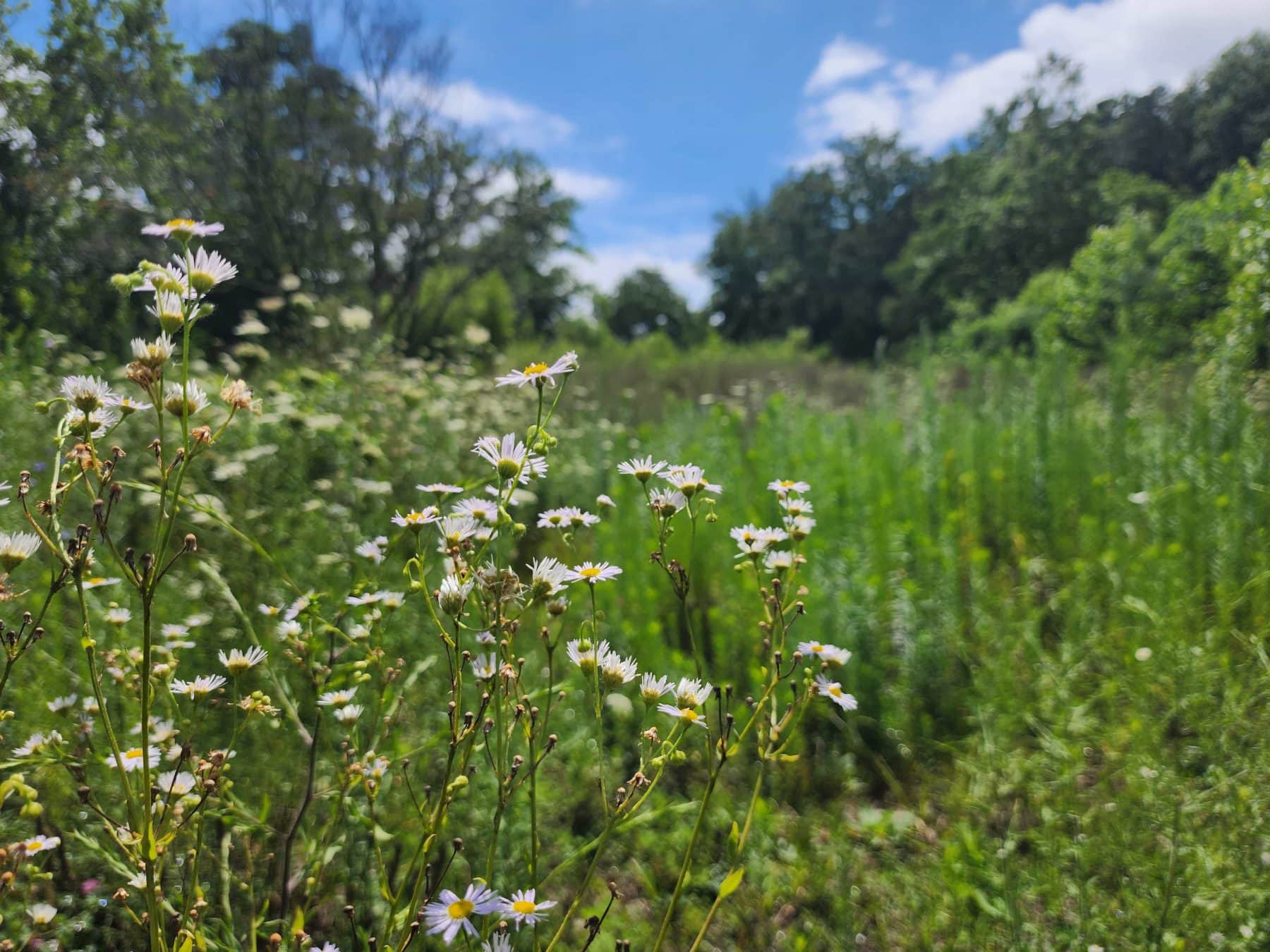
That acquisition is the first in our commitment to a multi-year, multi-site strategy on the Swannanoa River to mitigate future storm events—where we’re looking to work with willing property owners. That commitment includes promoting use of the FEMA Buyout Program as a vehicle for science-based restoration and flood mitigation for flood-prone neighborhoods. The federal program places qualifying properties into green space uses for all in perpetuity. Our status as an accredited land-trust allows us to bring sound restoration principles to river-adjacent lands acquired for conservation, along with long-term stewardship to promote stream health.
Less visible than the parks and grant announcements are the dozens of quiet, one-on-one conversations with landowners whose streams, driveways, and bridges were damaged by Helene—conversations that have shaped where and how we can support restoration, with an eye toward those who can least afford to rebuild alone.
Advocating for high-use areas post-Helene
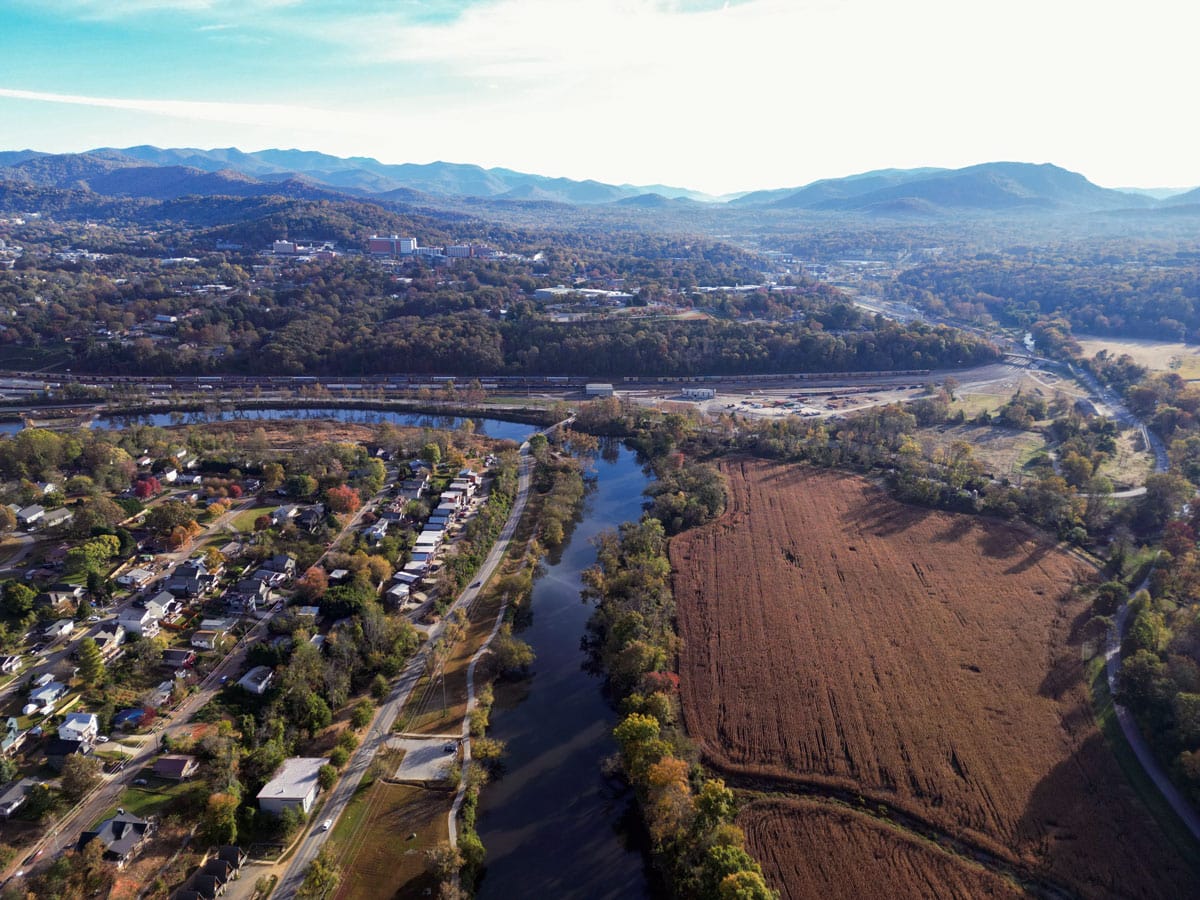
In the weeks following the storm, we were delighted to highlight Karen Cragnolin Park as a flagship post-Helene resilience model. The park sustained only minor damage in the Amboy Road corridor compared to surrounding areas, and we were able to quickly re-open the park for public use of a popular riverside property that met its aims: providing a haven for native species, a resilient community asset, and a landscape designed to absorb floodwaters and endure future climate impacts.
Stay tuned as we open new river parks designed with nature in mind! Watch for Gateway Park on Riverside Drive near the Pearson Bridge, and Azalea Preserve near the soccer fields on Azalea Road late this year – with two more close behind – the Swannanoa Valley Preserve across from the Beacon Bike Park, and a new art-infused mini-preserve at the historic chimney on Riverside Drive in the RAD.
Meanwhile, we’ll keep advocating for rebuilding river parks “in harmony” with the river rather than simply replacing what was lost. This approach reduces the risk of future damage—including new greenway alignments that are set further back from the riverbank, not at the expense of healthy riparian zones.
The river’s comeback story is still being written — not in a single dramatic gesture, but in the accumulation of stream miles stabilized, riverfront acres protected, and quiet conversations to support landowners rebuilding their lives. With each new riverbank restored and every park reopened, it’s confirmation that the French Broad watershed is coming back stronger and more resilient than before. Thank you for being part of this journey with us — there’s much more work ahead, and we’re grateful to be moving forward with you.