
As Western North Carolina remains in Extreme Drought (the second-most severe category), we are all feeling the impacts—our rivers and streams are running abnormally low, lawns are turning brown, and some communities have needed to implement water restrictions. The precipitation we’ve begun to see has certainly helped, but it is far from enough to pull us out of a drought that has been building since August 2025. Our rainfall deficit—the difference between how much precipitation we would typically expect and how much we have actually received—is now over 14 inches for the Asheville area.
Unfortunately, as the climate warms, we can expect to experience these kinds of weather extremes more often. The good news is that some plant species are better equipped to handle these conditions than others. Many non-native grasses commonly used in lawns, such as fescues, have shallow root systems that limit how much water they can access in the soil. On the other hand, native grass species develop extensive, deep root systems that allow them to reach moisture farther below the surface, making them far more resilient during periods of drought once they are established.
You can find many native grass species growing in the meadow at Karen Cragnolin Park, but we wanted to highlight a few in particular. After their first year of establishment, these grasses are exceptionally drought-tolerant and require little supplemental watering. It is important to note, however, that most grasses are flammable, especially as they dry out in the winter months. For that reason, they should not be planted directly adjacent to homes or other structures.
That said, native grasses can be an excellent addition to larger landscapes, meadow plantings, and naturalized areas. They not only provide resilience in the face of drought, but also offer important habitat and food sources for local wildlife, while reducing long-term maintenance and water needs.
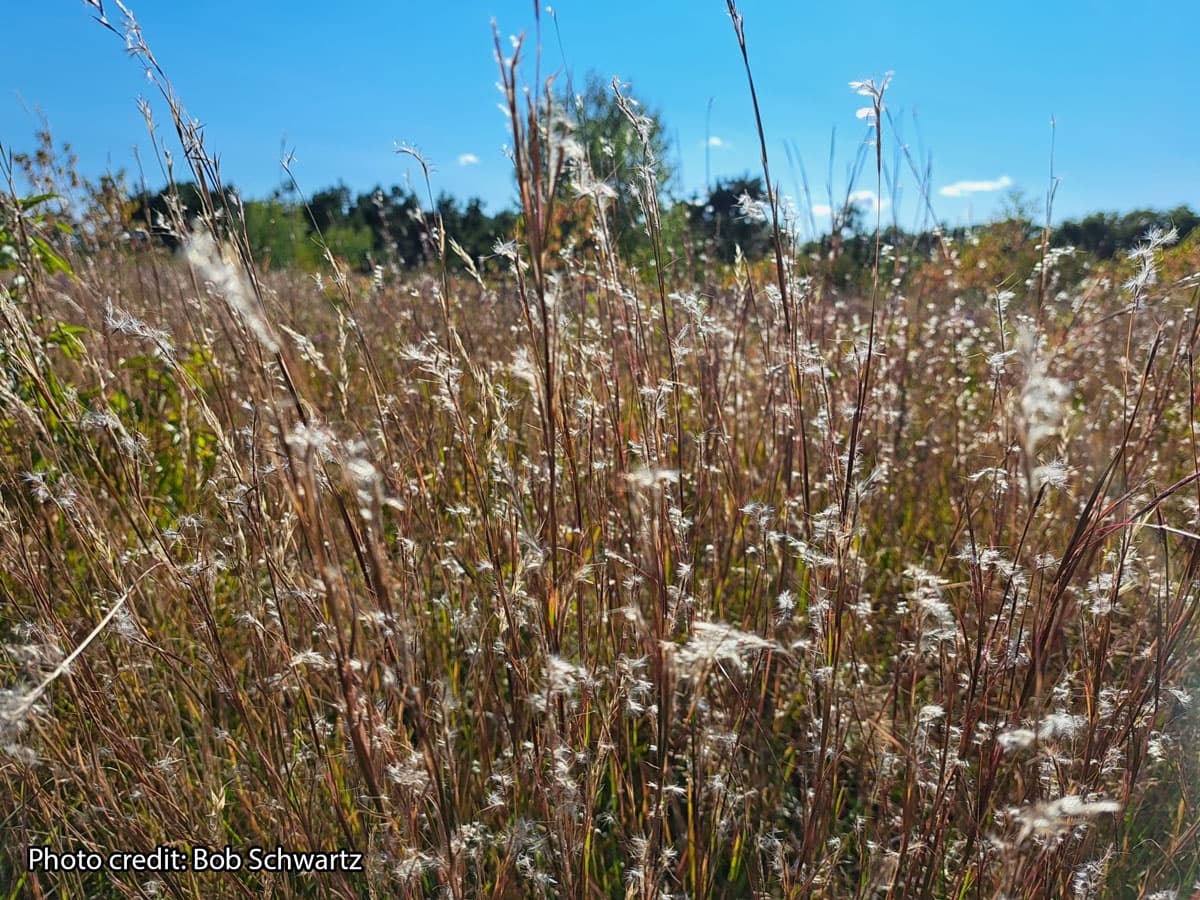
Little Bluestem (Schizachyrium scoparium)
This little native bunch grass is extremely drought tolerant. It grows greenish-blue throughout the spring and summer reaching up to 4 feet in height. It becomes amber in the autumn with fluffy seed pods at its tips. This plant is native to our region and loved by native wildlife. It is great to plant a few for landscaping appeal or across open sunny areas.
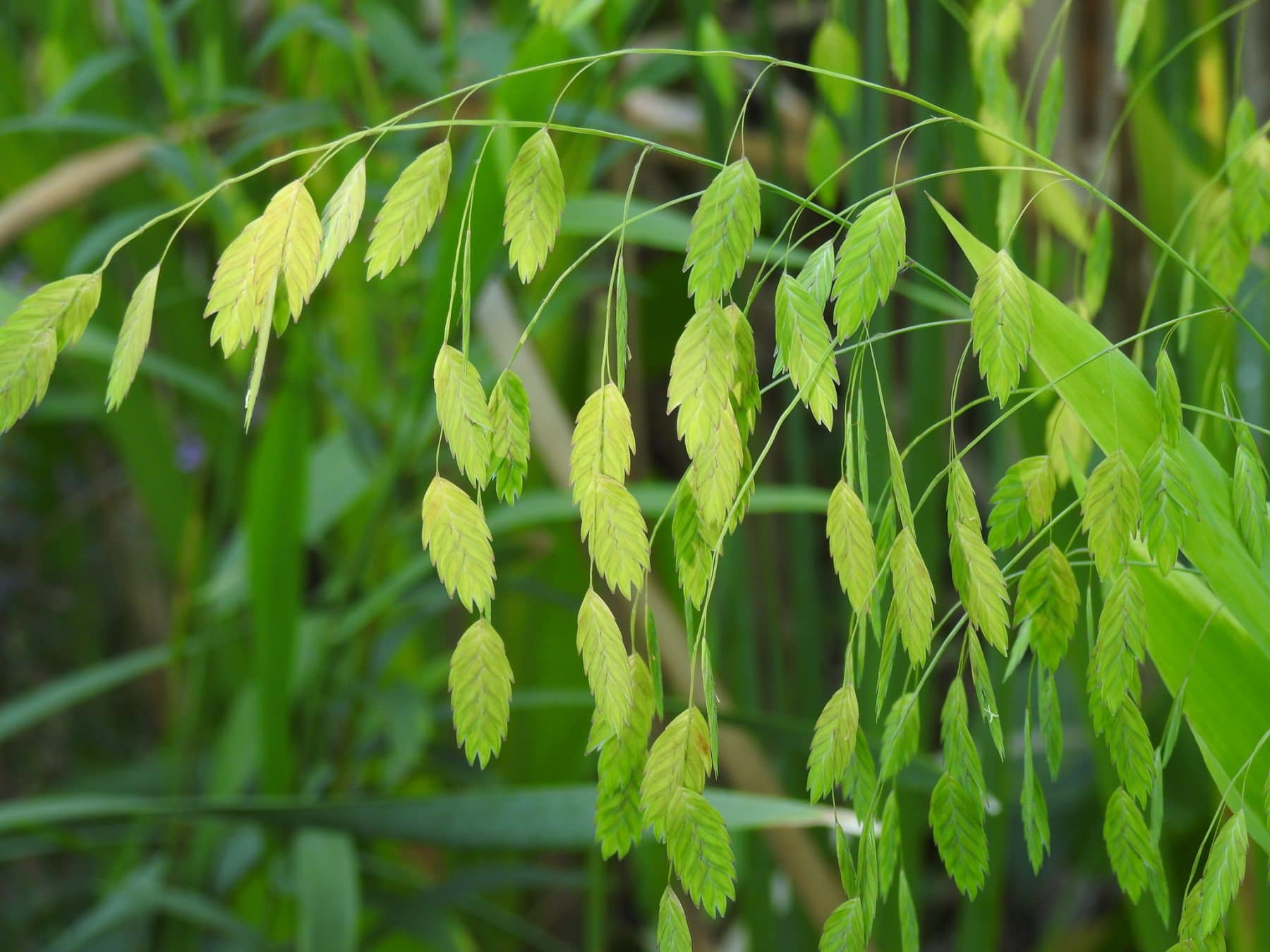
River Oats (Chasmanthium latifolium)
This plant grows in a variety of soil conditions. We particularly like to plant it in our sandiest places that other native grasses can’t tolerate, allowing it to spread along floodprone streambanks. It forms flat oat-like seeds that droop in the late season. It too is a bunch grass that grows up to 4 feet tall. It is a larval host plant for the Northern Pearly-Eye butterfly.
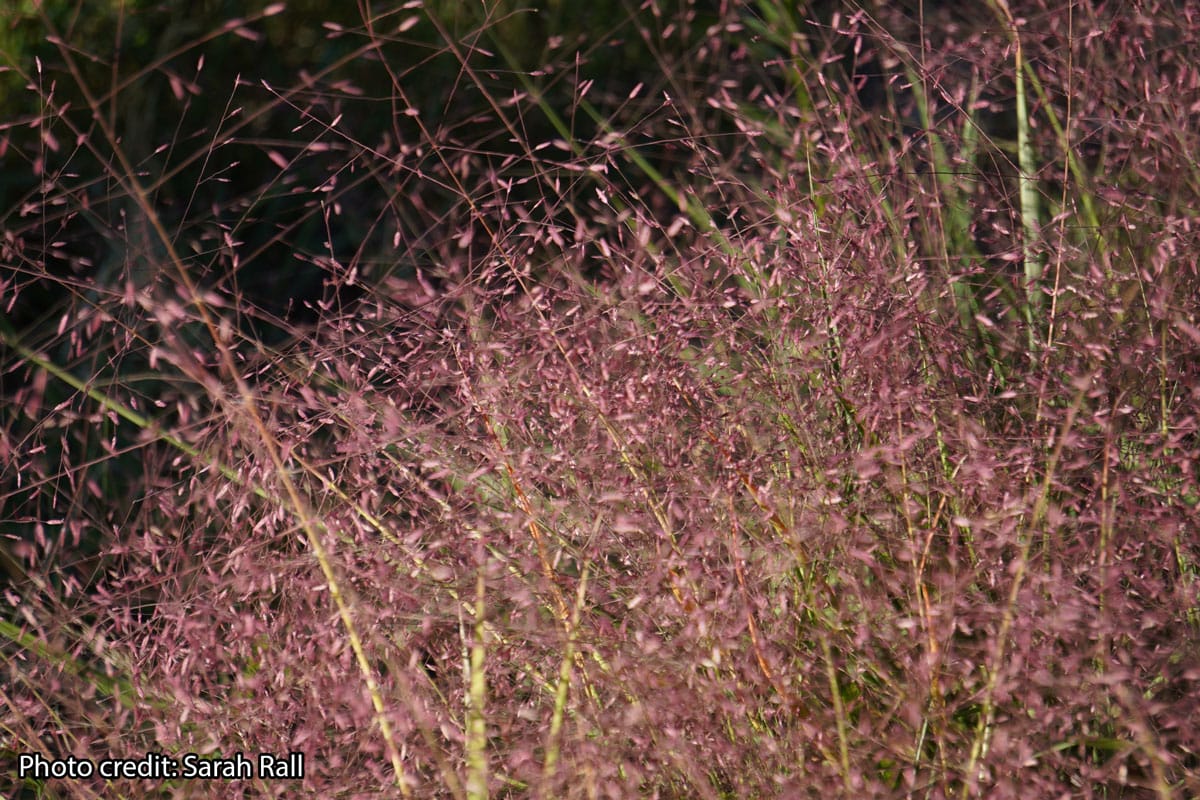
Purple Lovegrass (Eragrostis spectabilis)
This striking grass gets its name from the fluffy purple structure its seeds produce in the late summer. It grows a little shorter than the others, only 2 feet, but it is very adaptable to a variety of soil conditions. For this reason, it is great to use for erosion control. It is deer resistant, while also attracting a variety of songbirds and butterflies.